
Admissions · 16 min read
Studying Medicine in Spain from Latin America: requirements, homologation and costs
If you come from Latin America you have three advantages an Arab or Asian student does not: you speak the language of the classes, your country has almost certainly signed the apostille convention, and you can probably enter Spain without a visa. And you share the same two traps as everyone else: homologating your school certificate takes longer than anyone tells you, and as a non EU student you pay and compete on different terms from a Spaniard.
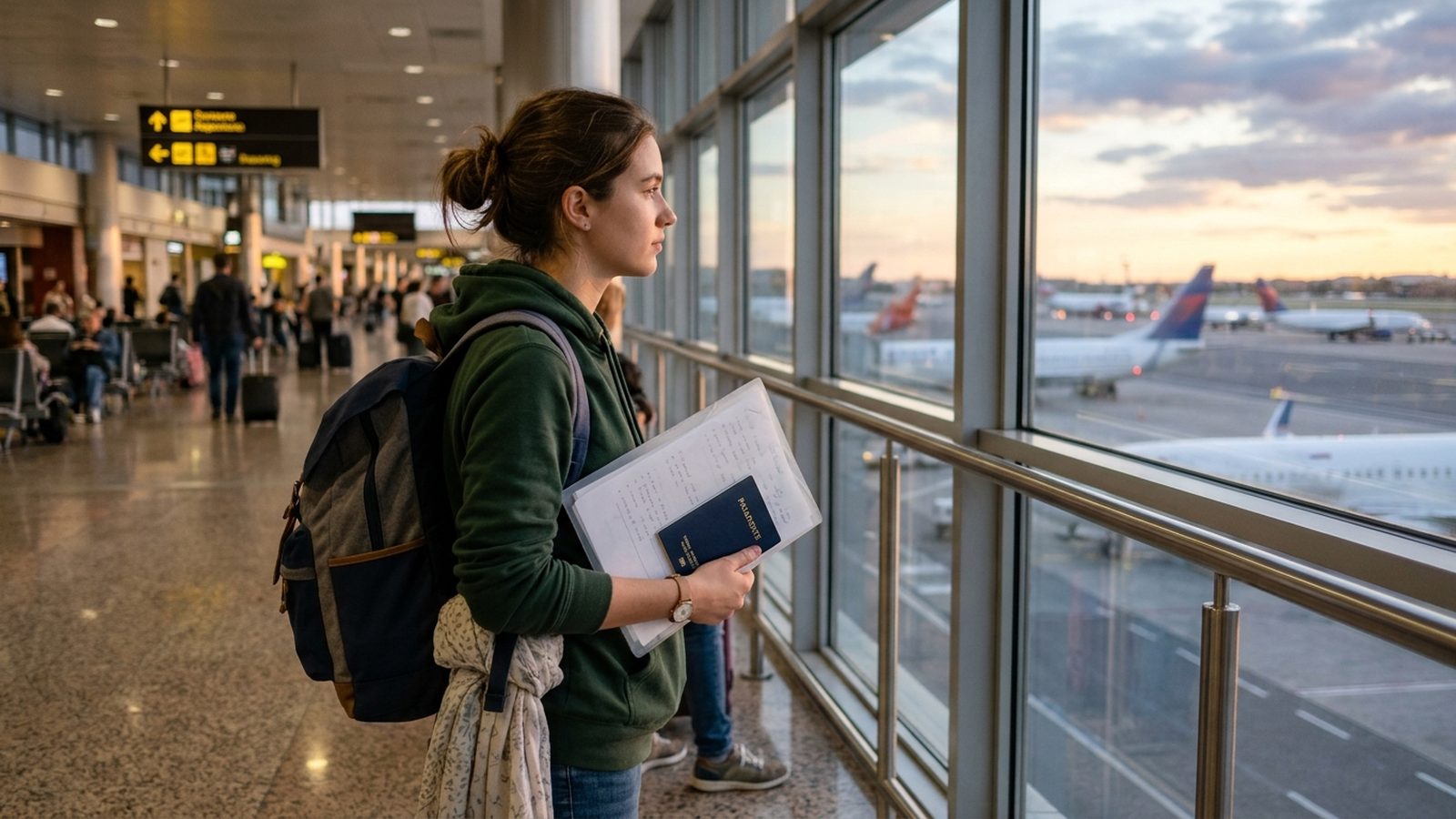
More and more students from Peru, Colombia, Chile, Cuba and the Dominican Republic write to me wanting to study Medicine in Spain. Almost all of them arrive with the same idea: that because they speak Spanish, the road is shorter. In part it is. But the procedures that decide whether you start in September or a year later are exactly the same as for any student from outside the European Union, and they have to be done in the right order.
What works in your favour
I will start with the good news, because there is a lot of it and it is worth using.
- The language. Classes, exams and clinical placements are in Spanish. You do not need a language certificate for public universities, and you save the year of language preparation many students from other countries need.
- Equivalence is already set. For countries in the Andrés Bello Convention, such as Peru, Colombia, Chile, Ecuador or Bolivia, Spain has official tables stating which school year in your country equals which Spanish year. Nothing has to be proven case by case.
- The apostille. Almost every Latin American country is part of the Hague Convention, so your documents are legalised with a single stamp in your own country.
- Entry without a visa. Many Latin American nationalities can enter Spain as tourists without a visa, which opens a route to apply for the study authorisation from inside Spain, explained below.
- What comes later. If one day you need to homologate a university degree to practise, the Ministry does not require the B2 Spanish certificate from nationals of countries where Spanish is an official language.
The full route, in order
This is the order that works. Each step depends on the previous one, and skipping one usually costs a whole academic year.
- Apply to homologate your school certificate with the Spanish Ministry of Education, with your documents apostilled or legalised, and translated if they are not in Spanish.
- Obtain the conditional registration certificate, which lets you move forward while the homologation is decided.
- Get accredited by UNEDasiss, which converts your grade to the Spanish scale and runs the exams.
- Sit the PCE in the subjects weighted by the universities you are aiming for, to raise your score above 10.
- Preregister at the universities, within each region's deadlines.
- Apply for the visa or the study authorisation with your admission letter.
- Arrive, register at the town hall and apply for the TIE within the first month.
The step most people underestimate is the first one, and it is the one to start earliest: ideally as soon as you finish your last school year, or even before with the years you have already passed.
A practical tip that seems minor and is not: keep a good quality scanned copy and a paper copy of every document, and note on one sheet which apostille, which translation and which date each one has. When preregistration or the visa comes round, half the delays come from not finding in time a paper you already had.
Homologating your school certificate: the slowest step
To enter a Spanish university with studies from outside the EU, your school leaving certificate has to be homologated to the Spanish Bachillerato. The Ministry of Education, Vocational Training and Sport decides it, with a fee paid using form 079.
A question I get constantly: does an 11 year school system count if the Spanish one has 12? Yes. For Andrés Bello Convention countries the equivalence has been regulated since 2001, and no extra year is needed. The Ministry's official sheet for Peru, for example, matches the 5th year of Secondary Education, in which the certificate is obtained, with both years of the Spanish Bachillerato. And the Ministry's guide for Colombia states it plainly: a student who has finished grade 11 and holds the certificate does not need to do a grade 12 to come to Spain.
What you will be asked for are the grades of your last school years, not just the diploma. For Colombia, grades 9, 10 and 11; for Peru, the year equivalent to the second year of Bachillerato and the two before it. Request them from your school in good time, because they are what the Ministry uses to calculate your average.
The legal deadline for a decision is six months, and silence counts as refusal: if there is no answer in that time the application is deemed rejected, although the Ministry is still obliged to decide. In practice timings vary a lot, which is why the conditional registration certificate exists: it lets you get accredited by UNEDasiss and sit the PCE while the file is still open. If yours stalls, I explain what to do in what to do when your homologation does not arrive.
Apostille or legalisation, depending on your country
Every foreign academic document has to arrive in Spain legalised. There are two routes, and which one applies depends only on your country.
If your country is part of the Hague Convention, the apostille is enough, issued by the competent authority of your own country. This covers the great majority of Latin America, including Peru, Colombia, Chile, Mexico, Argentina, Ecuador, Bolivia, Venezuela and the Dominican Republic.
If your country is not part of the Convention, you need diplomatic legalisation, which takes longer: first your country's Ministry of Foreign Affairs and then the Spanish consular representation. This is the case for Cuba, which has not signed the convention. If you are Cuban, allow extra weeks for this step alone and do not leave it until the end.
A detail that saves problems: the stamp is part of the document too. If your document needs translating, the sworn translation comes after the apostille or legalisation, never before. If your documents are already in Spanish, you normally need no translation at all, another advantage few students from other countries have.
Coming from Peru, Colombia, Chile, Cuba or the Dominican Republic and not sure where to start? Tell me which school year you are in and which country your documents are from, and I will build you a calendar with real dates to make it for September.
Message on WhatsAppYour grades: from your scale to the Spanish one
Each country grades on a different scale: Peru from 0 to 20, with 11 as the pass mark; Colombia, Chile and Mexico with their own. To compete in Spain your grade is converted to the Spanish scale of 0 to 10 from the marks of your last school years, and that access score is the basis for everything else.
The problem is that for Medicine 10 is not enough. Cutoff marks at public faculties are above 13 out of 14 almost everywhere, and the only way past 10 is to add points with the PCE. That is why, for Medicine, the PCE are not optional. I explain it fully in how the Medicine cutoff mark is calculated.
UNEDasiss and the PCE
UNEDasiss is the UNED service that accredits international students for entry to Spanish universities. It issues a credential with your access score and organises the PCE, the specific competence tests, which you can sit in Spain or at centres in other countries.
For Medicine, the usual choice is Biology and Chemistry, which carry the maximum weighting at almost every university, adding Maths or Physics as a safety net. Only your two best weighted subjects count, but sitting one more gives you margin if one goes badly. How to choose the combination is in which PCE subjects to choose for Medicine.
The PCE have fixed sessions, usually in May and June plus a later extraordinary session. If you want to start in September, your homologation must be requested well before those dates.
A realistic calendar for a September start
The exact dates change every year, but the order and the margins do not. If you want to start the degree in September, this is the rhythm that works:
- Autumn of the previous year. Ask your school for the grades of your last years and start the apostille or legalisation. Decide which universities you are aiming for so you know which PCE subjects you need.
- Winter. Submit the homologation application as soon as you have the documents. With the receipt, request the conditional registration certificate.
- Spring. Get accredited by UNEDasiss and register for the PCE. Prepare the subjects with past papers.
- May and June. You sit the PCE and, with your score, preregister within each region's deadlines.
- July and August. Admission lists come out. With your admission letter, you apply for the visa or, if your nationality allows it, prepare the application from inside Spain.
If you still have not applied for homologation by January, it is not impossible to make it, but you have no margin for any mistake. And a single badly legalised document can cost you the year.
If you are aiming for a private university
Private universities work with another calendar and other rules. They have their own admission tests, usually combining an exam, an interview and your record, and they open applications much earlier than public universities, often from autumn or winter. That is why some Latin American families secure a place at a private university first and then try for a public one with the PCE, knowing that the place deposit is usually lost if they finally choose the public option.
Homologation of your school certificate is still needed to enrol, although each private university sets when it requires it. Ask in writing before paying the deposit. Each one's prices and conditions are in private medical schools in Spain.
Visa, or authorisation from inside Spain
To study in Spain for more than 90 days you need a study stay authorisation. There are two ways to apply for it.
From your country, at the consulate. This is the classic route and the only one if your nationality needs a visa to enter the Schengen area, as is the case for Cuba, Bolivia, Ecuador or the Dominican Republic. You apply at the consular office where you live, with your admission letter, health insurance, proof of funds and criminal record certificate.
From inside Spain, if you entered without a visa. If your nationality does not need a visa for short stays, such as Peru, Colombia, Chile, Mexico, Argentina or Guatemala, the current immigration regulation, Royal Decree 1155/2024, allows you to submit the application from Spain within two months of entry. It is a useful route, but it has conditions: you need all the documents ready before you travel and you must keep to that deadline exactly.
In both cases the financial requirement is the same: proof of 100% of the IPREM for each month of stay, which in recent years has been around €600 a month, unless your accommodation is paid for the whole period. And the insurance must be from an insurer authorised in Spain, with no copayments or waiting periods. All the details are in the student visa for Spain.
What it costs, in your case
At a public university, Medicine tuition runs roughly from €750 to €2,500 per year depending on the region, and some regions apply a surcharge to students from outside the EU. As a Latin American you are in that group unless you hold another European nationality, so check each region's fee rules carefully before making your list of universities.
Adding tuition and living costs, six years come to around €70,000 at a public university in a mid sized city without a surcharge, and can exceed €100,000 in a large city with a surcharge. At a private university the first year costs €14,200 to €25,080 in 2026/27, and the whole degree can exceed €200,000. The full calculation is in the cost of studying Medicine in Spain.
There is a risk that affects Latin American families more than others: the exchange rate. Tuition and rent are paid in euros for six years, and your family's income is probably in soles, pesos or dollars. A devaluation halfway through the degree can break a budget that looked comfortable at the start. Always leave a margin and, if you can, have at least the first year covered in euros.
It helps to know that the regulation allows higher education students to work up to 30 hours a week, as long as it is compatible with their studies. In the first years of Medicine, with placements and exams, few people reach those hours, but a weekend job can ease costs.
After the degree: MIR, work and nationality
When you finish you will hold a Spanish degree, so you will not need to homologate anything to practise as a doctor in Spain. To specialise or work in the public health system you need the MIR, in which non EU candidates compete, with some exceptions, for a limited quota: in the latest call, 10% of places.
On nationality, Spanish law asks nationals of Ibero American countries for only two years of legal and continuous residence, instead of the general ten. But note an important detail: your years as a student are a stay, not residence, and under the usual interpretation they do not count towards those two years. They start counting when you move to a residence authorisation, for example for work after the degree. If this point is key to your plan, consult an immigration lawyer before taking anything for granted.
The mistakes I see most
- Waiting until you graduate from school to start the paperwork. The apostille, the grades and the homologation application can be prepared earlier.
- Requesting only the diploma and not the grades of the last years. Without them the Ministry cannot calculate your average.
- Believing your school grade is enough. For Medicine, without the PCE you will not reach the cutoff marks.
- Travelling as a tourist without complete documents, planning to apply from inside Spain. The two month deadline starts when you enter.
- Budgeting in your own currency. Do it in euros, with a margin for the exchange rate.
- Assuming that studying here counts towards nationality. In principle, it does not.
Note. This guide is informed guidance, not legal advice. Homologation, immigration and public fee rules change, and every case has its own details. Always check the current requirements on the official websites of the Ministry, UNEDasiss and the consulate that corresponds to you.
Frequently asked questions
Do I need a Spanish language certificate to study Medicine in Spain if I am Latin American?
No. If your mother tongue is Spanish and you studied in Spanish, public universities do not ask for a language certificate. And if one day you homologate a university degree to practise, the Ministry does not require the B2 level from nationals of countries where Spanish is an official language either.
Is my 11 year school certificate valid for entering university in Spain?
Yes. For Andrés Bello Convention countries such as Colombia or Peru, the equivalence is regulated and no extra year is needed. You will be asked for the grades of your last school years to calculate your average.
Can I apply for the study authorisation from Spain if I entered as a tourist?
If your nationality does not need a visa for short stays, Royal Decree 1155/2024 allows you to apply from Spain within two months of entry. You need all your documents ready before you travel.
How long does homologation of the school certificate take?
The legal deadline is six months and silence counts as refusal, but in practice timings vary a lot. That is why it is worth applying as early as possible and using the conditional registration certificate to get accredited by UNEDasiss and sit the PCE while it is decided.
Does the time I study in Spain count towards nationality?
In principle, no. Ibero Americans can apply for nationality after two years of legal residence, but years with a study stay authorisation are not considered residence under the usual interpretation. They start counting when you move to a residence authorisation, for example for work.
Start the paperwork before everyone else
Tell me where you are from, which school year you are in and which universities you would like to enter, and we will build the full route together: homologation, UNEDasiss, PCE, preregistration and visa, each step with its date.
Message on WhatsAppIf you are still deciding where to study, see Medicine entry requirements, university by university, and if you want to understand the difference between homologation and credit recognition, read homologación, equivalencia and convalidación are not the same thing.
Published on 10 November 2026 · Salam Aiach